Rug Size for a Living Room: What Fits Your Sofa?
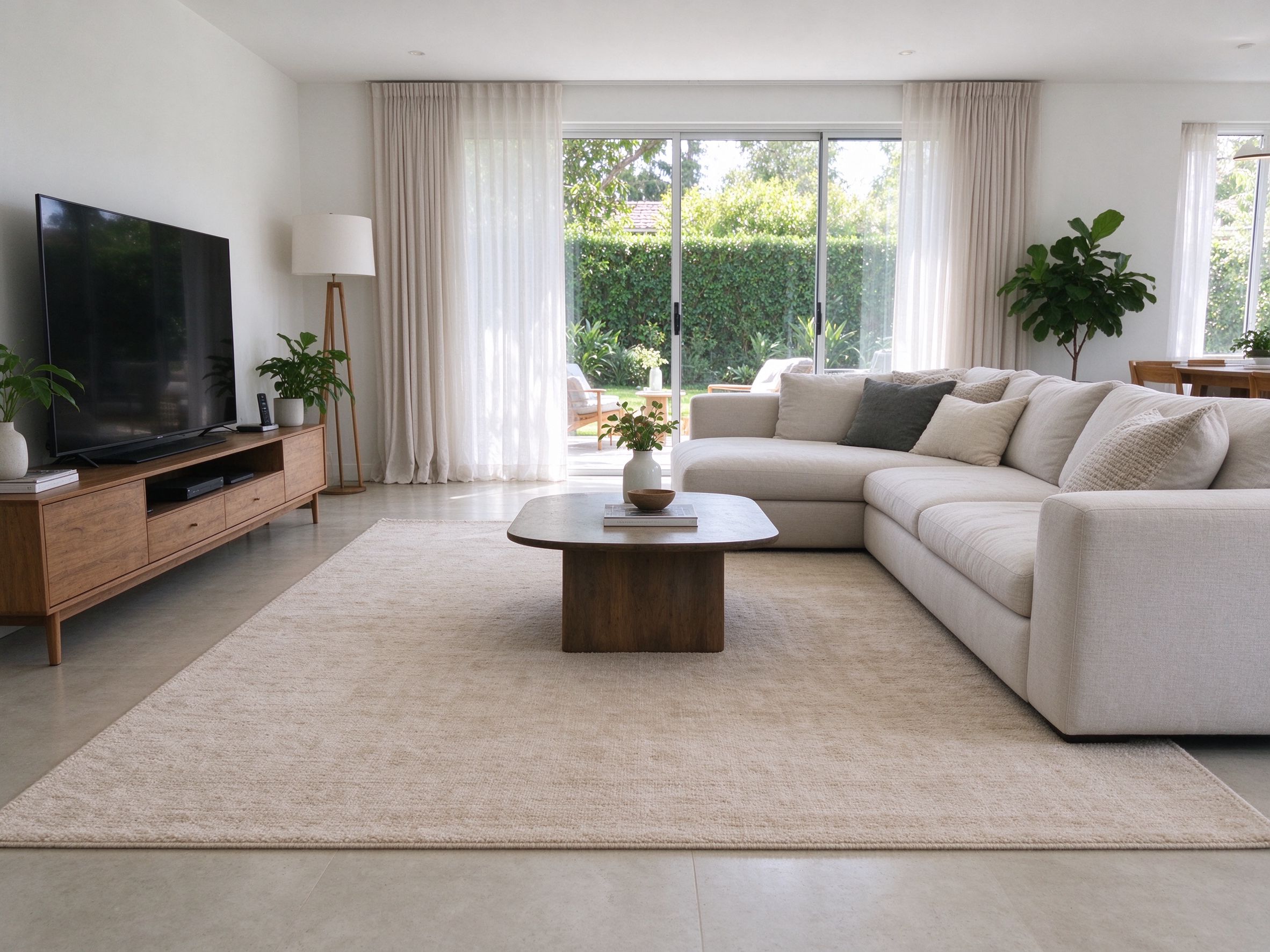
Quick answer: choose a rug big enough that the front legs of all main seating sit on it. For a standard sofa against the wall, an 8×10 works for a small room and a 9×12 for a larger one. Here's how to measure and decide.
- Rule of thumb
- 8x10 vs 9x12
- Measure for your sofa
- Placement options
- Small rooms
- Common mistakes
Rule of thumb
The classic guideline: a living room rug should anchor the seating, with the front legs of the sofa and chairs on the rug and about 12–18 inches of bare floor showing at the edges. If the rug is too small, the room looks disconnected; too big, it crowds the walls.
That 12–18-in band of bare floor is the visual buffer that makes a rug look deliberately sized instead of a random mat. Less than 12 in reads cramped; more than 18 in and the rug starts to look undersized for the room.
8x10 vs 9x12
| Rug | Best for |
|---|---|
| 5×8 | Small seating areas, under a loveseat |
| 8×10 | Small–medium living rooms, 2–3 seats |
| 9×12 | Larger rooms, sofa + chairs |
| 10×14 / 12×15 | Big open-plan spaces, L-shape sofas |
A 9×12 is 108 sq ft vs 80 for an 8×10 — the jump feels bigger than the name suggests. If you're torn between the two and the room is medium-sized, size up: a 9×12 anchors a sofa plus a chair better and is rarely wrong.
Measure for your sofa
Measure the seating arrangement's footprint (sofa length plus chairs), then add 24–36 in on each side for the "landing" zone. A 7-ft sofa with a chair on one side usually needs a 9×12; just a 6-ft sofa against a wall can work with 8×10.
The landing zone is where your feet rest when you sit or step around the furniture. Cram the rug too tight under the seating and you'll feel the edge underfoot when you walk past — that 24-in buffer is what keeps it comfortable.
Placement options
- Front legs on: the most common and practical — rug under the front legs, back legs on the floor.
- All legs on: for a formal, grounded look — needs a larger rug (9×12 or up).
- Floating (coffee-table only): rug under just the coffee table — works only in small niches, often looks unfinished.
Small rooms
In a compact living room, don't force a huge rug. A 5×8 or 6×9 under the seating front legs still reads as intentional and keeps the space open. When in doubt, size up slightly — an undersized rug is the most common mistake.
Common mistakes
- Rug too small. If both front legs miss the rug, it looks like a floating island.
- Too much floor showing. Leave a balanced 12–18 in at the edges.
- Not accounting for the coffee table. The rug should extend well past it on both sides.
- Buying before measuring the layout. Lay painters' tape on the floor first.
FAQ
A 3-seater sofa works with an 8×10 ft rug if it's against a wall, or a 9×12 ft if you want all legs on the rug in a larger room.
A 9×12 ft rug is bigger (108 sq ft vs 80 sq ft). The 8×10 suits smaller rooms; the 9×12 suits larger seating areas and bigger sofas.
Yes — the front legs of the sofa should sit on the rug, with the back legs on the floor for the standard look. For a formal look, put all legs on a larger rug.
Aim for 12–18 inches of bare floor between the rug and the walls for a balanced look. Much less looks cramped, much more looks undersized.