Rug Size for a Dining Room: Table & Seating
Quick answer: the rug should extend at least 24 inches past the table on every side. A 6-seat table fits an 8×10; an 8-seat table fits a 9×12. Here's how to measure and choose.
- The 24-inch rule
- Table size to rug size
- Round tables
- Worked example
- Shape & placement
- Common mistakes
The 24-inch rule
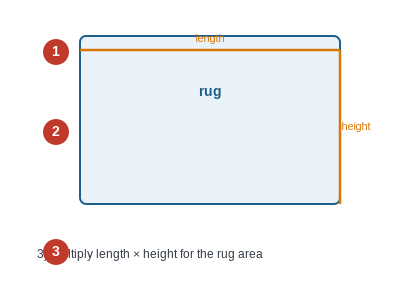
The dining rug exists so chairs stay on it when pushed back. That means the rug must extend at least 24 inches past the table on every side — roughly the space a chair takes when pulled out. Less than that and chair legs catch the rug edge every time someone gets up.
Measure from the table edge, not the room. Add 24 in to each side to find your minimum rug length and width.
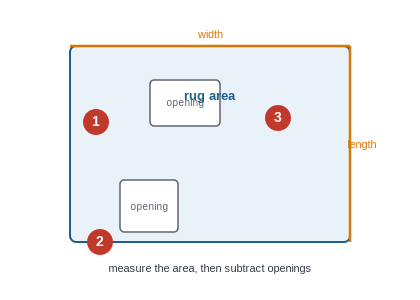
Table size to rug size
| Table | Approx size | Rug size |
|---|---|---|
| 4-seat square | 3–4 ft | 5×8 or 6×6 |
| 6-seat rectangle | ~7 ft long | 8×10 |
| 8-seat rectangle | ~8–9 ft long | 9×12 |
| 10-seat / large | 10 ft+ | 10×14 |
These assume a standard table and about 18 in of table-side seating depth. A deeper room with leaves out needs the larger option.
Round tables
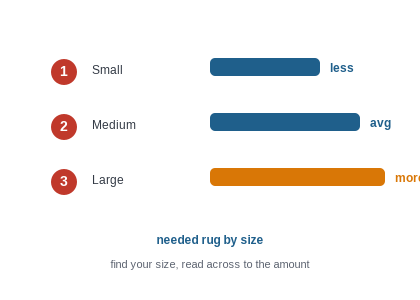
For a round table, use a round rug that's about 4 ft bigger in diameter than the table. A 48-in (4 ft) table takes a 7–8 ft round rug; a 60-in table takes an 8–9 ft round. That gives you the 2 ft of rug past the chairs all the way around.
Worked example
A 7-ft, 6-seat rectangular table:
- Add 24 in to each side → 7 + 2 + 2 = 11 ft long
- Table width ~3.5 ft → 3.5 + 4 = 7.5 ft wide
- Nearest standard sizes: an 8×10 is slightly short in length; a 9×12 fits comfortably
If the room is tight, an 8×10 works when you pull chairs in closer, but the 9×12 is the safer, more comfortable choice for daily use.
Shape & placement
Match the rug shape to the table: rectangle for a rectangle table, round for a round table. Center the rug under the table so the overhang is even on all sides. In an open-plan room, the dining rug also visually separates the eating zone from the living area.
Common mistakes
- Rug too small. If chairs go off the rug when pushed back, it's undersized.
- Only 12 in of overhang. Not enough — chair legs catch the edge.
- Buying for the room, not the table. The rug is sized to the table + chairs, not the wall-to-wall floor.
- Square rug under a long table. Match the shape to the table.
FAQ
A 6-seat rectangular table (about 7 ft long) fits an 8×10 ft rug, so the rug extends roughly 2 ft beyond each side. An 8-person table usually needs a 9×12.
The rug should extend at least 24 inches beyond the table on every side so chairs stay on the rug when pushed back.
Yes — the table and all chairs should sit on the rug, with the rug extending past the chairs when they're pulled out. Otherwise chair legs catch the edge.
A 48-in round table with 6 chairs needs a 7–8 ft round rug, so the rug extends about 2 ft past the table edge on all sides.