Paver Base & Sand: What Goes Under a Patio
Quick answer: a paver patio needs 4–6 in of compacted gravel base plus 1 in of sand. The base carries the load — not the pavers. Here's how much to dig and what to add.
- Why the base matters
- Base depth
- Sand bed
- Base chart
- Worked example
- Common mistakes
Why the base matters
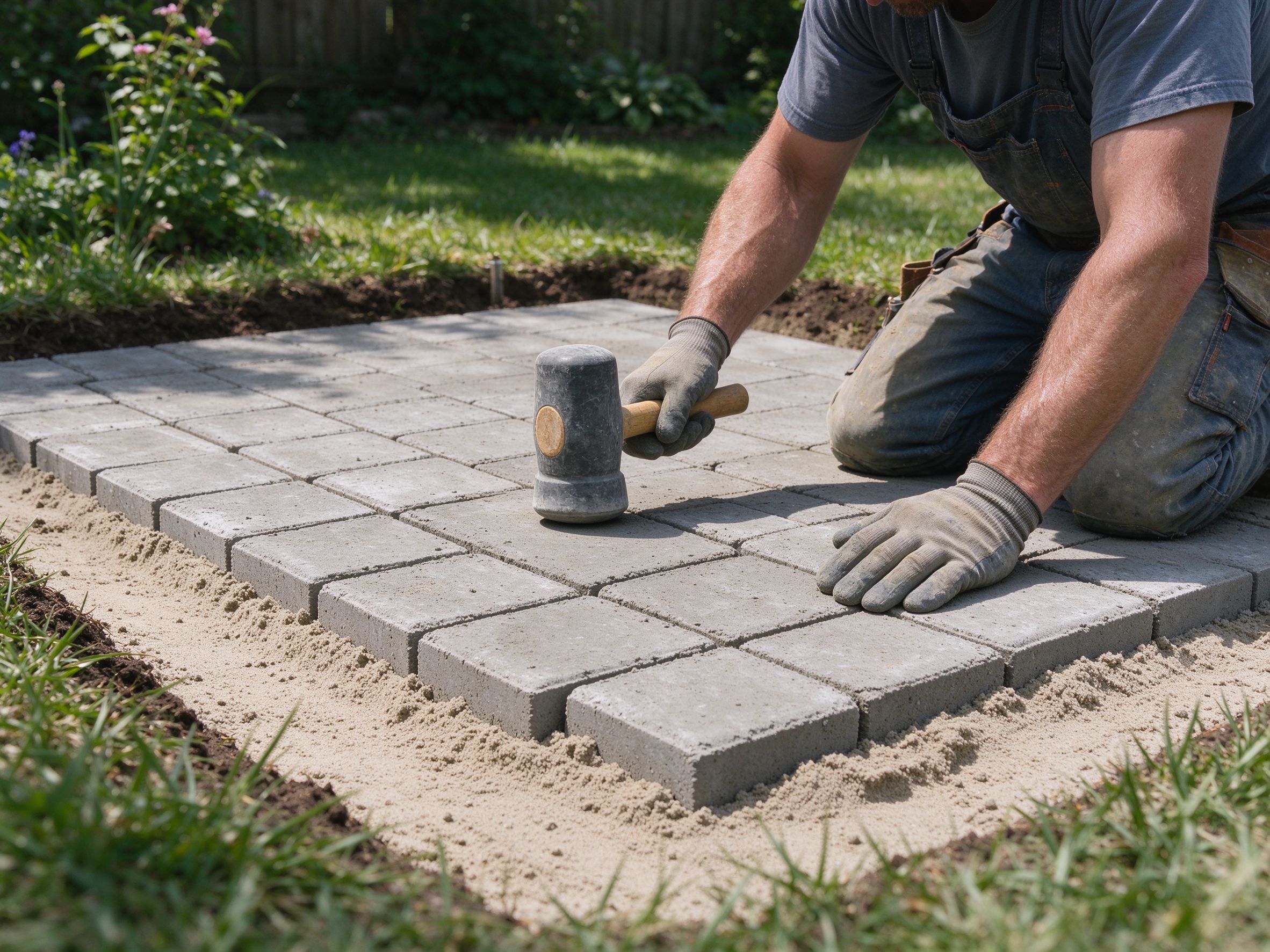
The base, not the pavers, carries the load. A compacted gravel base spreads weight, drains water, and keeps the surface from sinking and shifting. Pavers on bare dirt will settle unevenly and create a wobbly, tripping patio no matter how well they're laid.
Base depth
For a patio, use about 4–6 in of compacted gravel. For a driveway that carries vehicles, go to 8–12 in. The gravel is crushed stone (often 3/4-in minus) compacted in layers over firm, level soil. More traffic = deeper base.
Sand bed
On top of the gravel goes a 1-in bed of sand that the pavers sit on and level against. After the pavers are down, sweep fine joint sand into the gaps and compact — that sand locks the pavers together, stops shifting, and helps control weeds.
Base chart
| Use | Gravel base | Sand bed |
|---|---|---|
| Light patio / walkway | 4 in | 1 in |
| Standard patio | 6 in | 1 in |
| Driveway (vehicles) | 8–12 in | 1 in |
Compact in thin layers and check level as you go — a base that's off level shows up in every paver above it.
Worked example
A 10×12 patio at 6 in of base + 1 in of sand:
- Gravel volume = 120 sq ft × 0.5 ft ÷ 27 ≈ 2.2 cu yd
- Sand volume = 120 × 0.083 ÷ 27 ≈ 0.37 cu yd
- Plus joint sand for the gaps
The paver calculator counts pavers; order base material by these volumes with some margin.
Common mistakes
- Pavers on dirt. They sink and shift.
- Shallow base on a driveway. Vehicles need 8–12 in.
- No compaction. Loose gravel settles under the pavers.
- Skipping joint sand. Pavers shift and weeds grow.
FAQ
For a patio, use about 4–6 inches of compacted gravel base plus 1 inch of sand. For a driveway that carries vehicles, go to 8–12 inches of gravel. The base, not the pavers, carries the load.
The base is compacted crushed stone or gravel (often 3/4-inch minus), laid over firm soil. On top goes a 1-inch bed of sand that the pavers sit on and level against.
Yes — sweep fine joint sand into the gaps between pavers and compact the patio. The sand locks the pavers together, stops shifting, and helps control weeds.
No — pavers on bare dirt will sink and shift. Even light-use patios need a compacted gravel base to keep the surface level and stable over time.