How Many Retaining Wall Blocks Do I Need? (With Cap Blocks)
Quick answer: divide the wall face area — length × height — by one block's face area, then add 5–10% for cuts. A 20 ft long, 2 ft high wall with 6×16 in blocks needs about 80–100 blocks, plus cap blocks for the top edge.
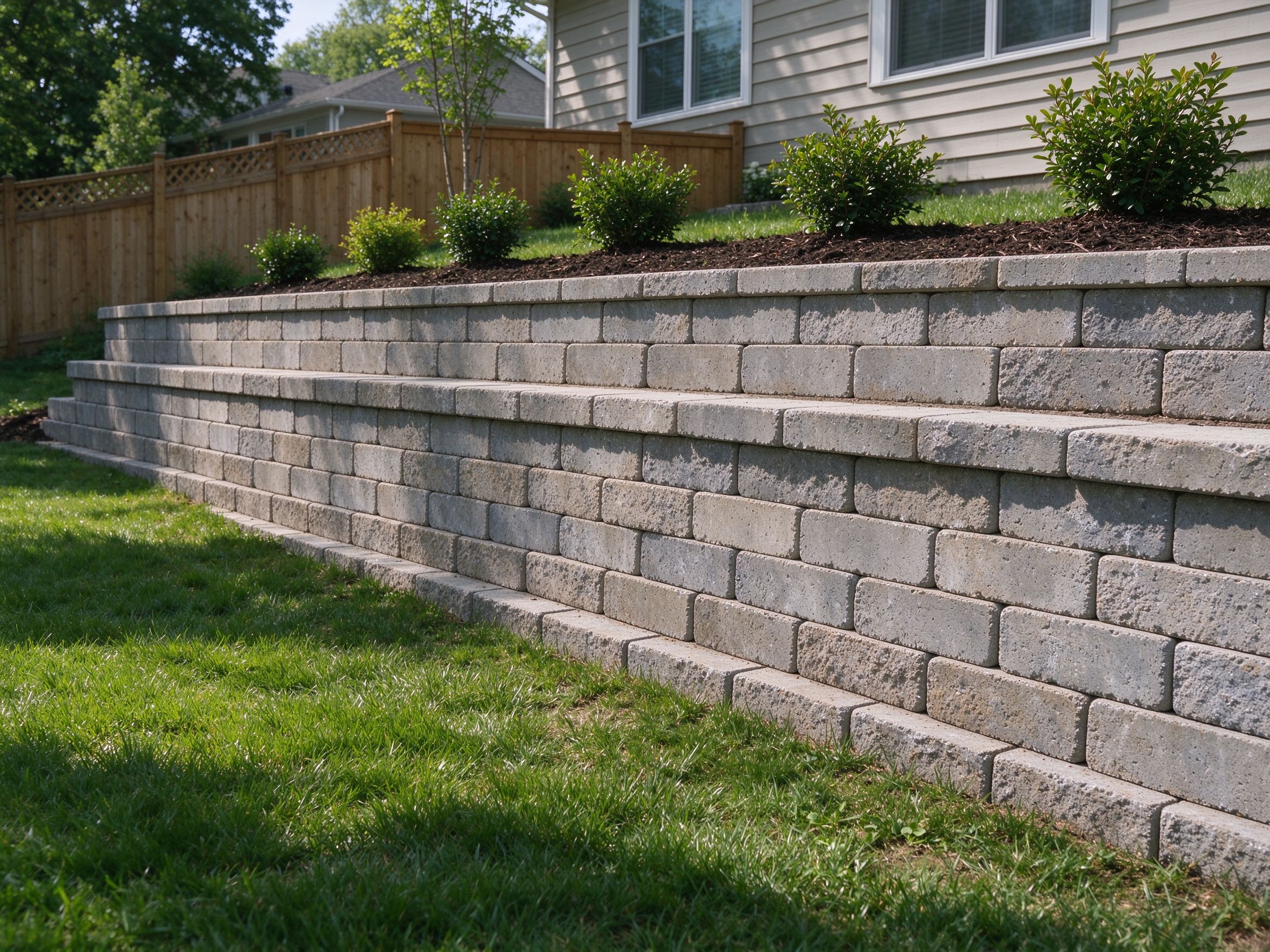

Step 1: the face-area formula
Retaining walls are built block by block, so count them by face area. Wall face area = length × height. Then divide by the face area of one block (a common landscaping block is 6 in high × 16 in long = 0.66 sq ft per face). Multiply by the number of courses (height ÷ block height). Worked example — a 20 ft wall at 2 ft high:
- Face area = 20 × 2 = 40 sq ft
- Block face = 0.66 sq ft → 40 ÷ 0.66 ≈ 61 blocks
- Add 10% waste ≈ 7 → buy ~68 blocks
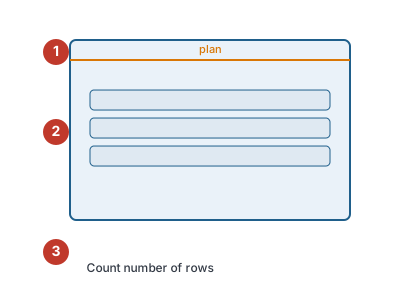
Blocks by wall size
Using a 6×16 in block (0.66 sq ft face) plus 10% waste:
| Wall run × height | Face area | Blocks (incl. waste) |
|---|---|---|
| 10 ft × 1 ft | 10 sq ft | ~17 |
| 20 ft × 2 ft | 40 sq ft | ~68 |
| 30 ft × 2 ft | 60 sq ft | ~100 |
| 20 ft × 3 ft | 60 sq ft | ~100 |
Don't forget cap blocks and the buried course
Two extras people miss. Cap blocks run along the top edge — count roughly one per 16 in of wall length (or divide the top length by the cap length). Below-grade course: many builders bury the first course below ground for stability, so add a full row of blocks to your count. Add both before you order.

Common mistakes
- Counting by rows, not face area. Both work, but you must know your block's exact height and length.
- Forgetting caps and the buried course. These add a full row or two of blocks.
- No waste for cuts. Corners and ends need full blocks — add 5–10%.
- Assuming block sizes are standard. Face dimensions vary by product; check the label, not a rule of thumb.