How Much Pea Gravel Do I Need?
Quick answer: multiply area (sq ft) by depth (in), divide by 12 for cubic feet, then convert to tons. A 10×10 path at 2 in deep needs about 16.7 cu ft, or ~1.2 tons of pea gravel.
- Area × depth
- Depth by use
- Cubic feet to tons
- Worked example
- Common mistakes
Area × depth
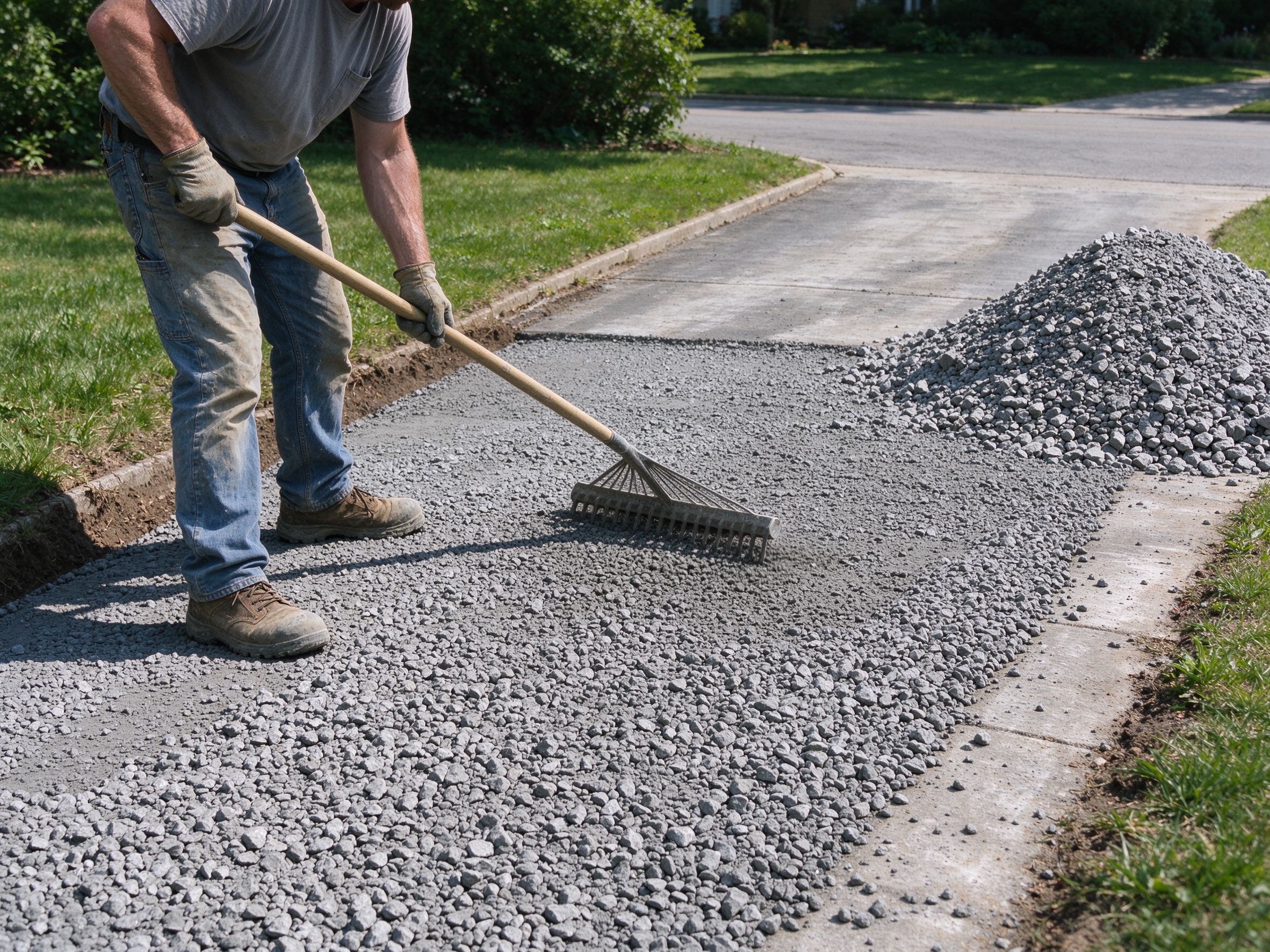
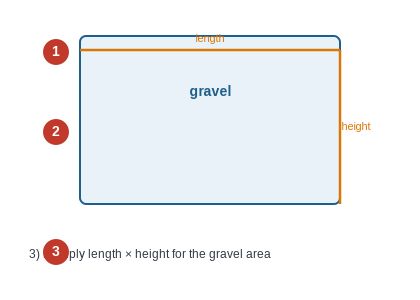
First find the area: length × width in feet. Then multiply by the depth in inches, and divide by 12 to get cubic feet. A 10-ft × 10-ft area at 2 in = 100 × 2 ÷ 12 ≈ 16.7 cu ft. This is the core pea-gravel math.
Depth by use
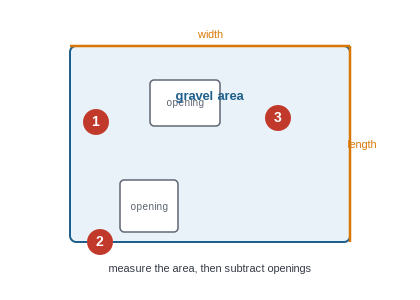
Depth changes the volume fast. 2 inches is right for a walkway or patio topping. 3–4 inches suits a drainage layer or a path that gets real foot traffic. Going from 2 in to 4 in doubles your material and cost, so pick the depth that fits the job.
Cubic feet to tons
Pea gravel weighs about 1.4 tons per cubic yard, or roughly 100–110 lb per cubic foot. To convert: cubic feet × ~0.052 = tons, or divide by 27 then × 1.4. Most suppliers sell by the ton, so this step is what actually matches an order.
Depth chart
| Area | 2-in deep | 3-in deep | 4-in deep |
|---|---|---|---|
| 50 sq ft | 8.3 cu ft / 0.6 t | 12.5 / 0.9 t | 16.7 / 1.2 t |
| 100 sq ft | 16.7 / 1.2 t | 25 / 1.8 t | 33.3 / 2.3 t |
| 200 sq ft | 33.3 / 2.3 t | 50 / 3.5 t | 66.7 / 4.6 t |
Add ~10% for leveling and settling on top of these numbers.
Worked example
A 6-ft × 30-ft pea-gravel path at 2 in deep:
- Area: 6 × 30 = 180 sq ft
- Volume: 180 × 2 ÷ 12 = 30 cu ft
- Tons: 30 × 0.052 ≈ 1.6 tons (or ~4 bags per sq ft)
The pea gravel calculator does the area and ton conversion in one click.
Common mistakes
- Mixing inches and feet. Convert depth to feet first.
- Ordering by area, not volume. You buy volume, not square footage.
- Ignoring settling. Pea gravel compacts 5–10%.
- Not adding waste. Edges and spills need ~10% extra.
FAQ
Multiply the area (length × width in feet) by the depth in inches, then divide by 12 to get cubic feet. A 10x10 path at 2 inches deep is about 16.7 cubic feet of pea gravel.
A walkway or patio needs 2 inches of pea gravel; a drainage layer or heavy-traffic path may need 3-4 inches. Going deeper uses much more material and cost.
Pea gravel weighs about 1.4 tons per cubic yard (roughly 100-110 lb per cubic foot). So a cubic yard of pea gravel is around 1.4 tons, and most suppliers price by the ton.
Small bags hold about 0.5 cubic feet. For a 16.7-cubic-foot area you'd need about 34 bags. For larger jobs, ordering by the cubic yard or ton is usually cheaper.