Roof Pitch & Materials: How to Measure
Quick answer: roof pitch is the rise over run (like 6/12) and measures how steep your roof is. It directly drives how many shingles you need — steeper roofs cover more area. Here's how to measure it.
- What pitch means
- How to measure
- Pitch & shingles
- Pitch chart
- Worked example
- Common mistakes
What pitch means
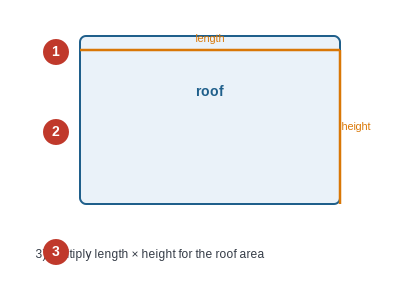
Roof pitch is written as rise over run. A 6/12 roof rises 6 inches for every 12 inches of horizontal run. Steeper pitches shed water and snow better, but they cost more and add surface area. Pitch matters for what material you can use and how much you'll need.
How to measure
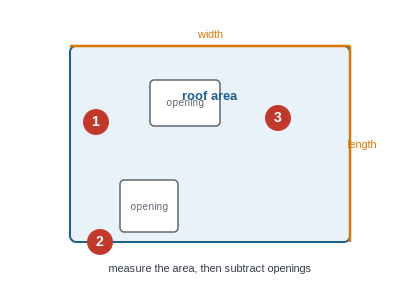
From the roof: hold a 12-in level flat against the slope, then measure the vertical drop at the 12-in mark. That rise in inches is the pitch — 5 in of rise is a 5/12 roof. From the ground, you can estimate with the floor-plan footprint and the roof's angle, but the level method is the accurate one.
Pitch & shingles
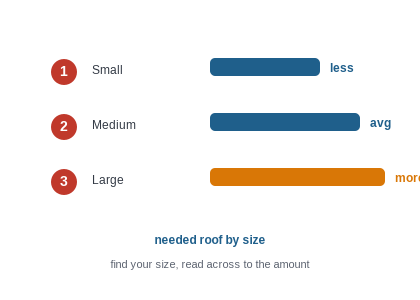
Steeper roofs have more surface area than the floor plan implies. A 12/12 roof is about 40% more surface than flat, so it needs more shingles and underlayment. Most roof calculators multiply the floor area by a pitch factor to find the true surface area — and pitch is why two houses of the same footprint can need very different amounts of roofing.
Pitch chart
| Pitch | Description | Surface vs floor plan |
|---|---|---|
| 2/12–3/12 | Low slope | ~5–8% more |
| 4/12–6/12 | Standard | ~12–18% more |
| 7/12–9/12 | Steeper | ~20–25% more |
| 10/12–12/12 | High slope | ~30–40% more |
Below 2/12, standard shingles aren't ideal — you need rolled roofing or a membrane.
Worked example
A house with a 1,200 sq ft footprint at a 6/12 pitch:
- Pitch factor ≈ 1.12
- Roof surface ≈ 1,200 × 1.12 ≈ 1,344 sq ft
- At 3 bundles per square (100 sq ft) ≈ 14 squares → ~42 bundles
The roof calculator handles the pitch factor and bundle count for you.
Common mistakes
- Using floor plan as roof area. Pitch adds surface.
- Guessing the pitch. Measure it — it changes the count a lot.
- Asphalt on a low-slope roof. Below 2/12 needs a different system.
- No waste allowance. Ridges, valleys, and cuts need extra.
FAQ
Roof pitch is how steep a roof is, written as rise over run (like 6/12). A 6/12 roof rises 6 inches for every 12 inches of horizontal run. Steeper pitches shed water better but cost more.
Use a level and a ruler: hold a 12-inch level flat against the roof, measure the vertical rise at the 12-inch mark. That rise in inches is the pitch — 5 inches of rise is a 5/12 roof.
Yes — steeper roofs have more surface area than the floor plan implies. A 12/12 roof is about 40% more surface than flat, so it needs more shingles and underlayment.
Standard asphalt shingles need at least a 2/12 pitch; 4/12 is recommended for good drainage. Below 2/12 you need rolled roofing or a membrane system instead.