How Much Paint for Kitchen Cabinets? (Per Door & Drawer)
Quick answer: a typical kitchen with about 20 doors and drawer fronts needs roughly 2–3 quarts of paint for two coats. A full custom cabinet run can reach a gallon. Here's the per-door area formula so you buy the right size can.
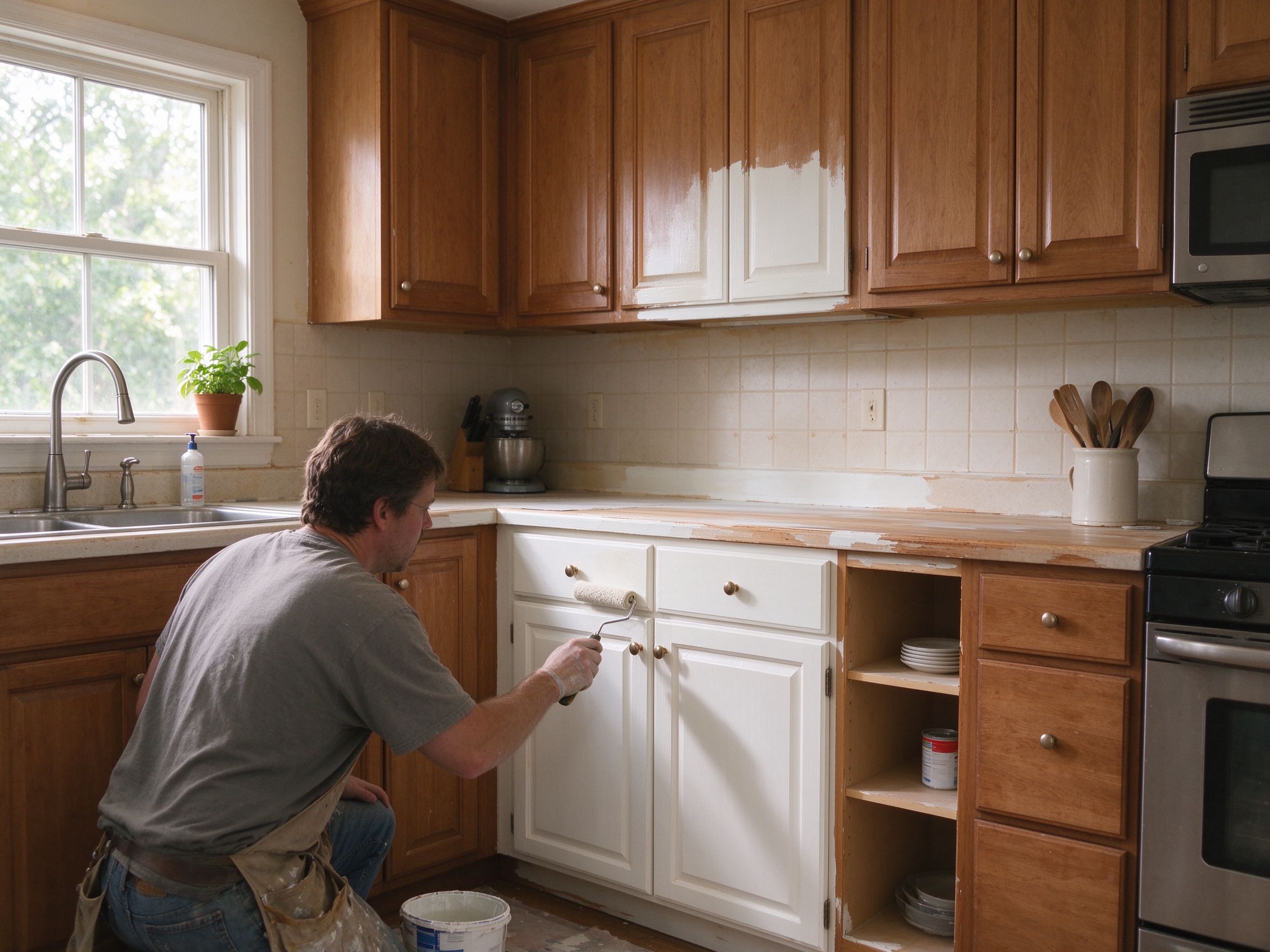

Step 1: count the fronts, measure one
Cabinet paint is best sized by counting door and drawer fronts, not by kitchen square footage — a kitchen with 15 doors and one with 25 need very different amounts even at the same footprint. Count every door, drawer and any exposed cabinet face, then measure one average door (a standard raised-panel door is roughly 1.5–2 sq ft per face). Multiply by the count for your total front area.
Quarts, not gallons, for most kitchens
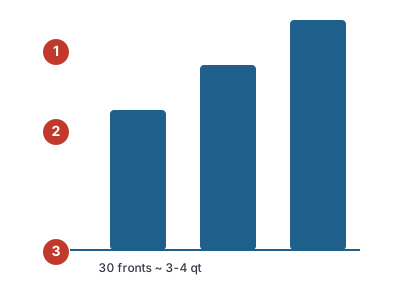
Here's the honest sizing: a quart covers about 100–150 sq ft per coat. Since your total door-front area is usually 30–50 sq ft, and you're doing two coats, a quart covers about 15–20 fronts. A full custom run with upper + lower cabinets, doors and drawers usually lands at 2–3 quarts. Only the largest kitchens need a full gallon.
| Cabinet fronts | Approx. area (2 coats) | Paint needed |
|---|---|---|
| 10 fronts | ~30–40 sq ft | 1 qt |
| 20 fronts | ~60–80 sq ft | 2 qts |
| 30 fronts | ~90–120 sq ft | 3 qts |
| 40+ fronts (custom) | ~120–160 sq ft | 1 gal |
Primer is not optional on cabinets
Kitchen cabinets see grease and moisture, and glossy or laminate surfaces reject paint. A bonding primer (often shellac or water-based bonding primer) gives the paint something to grip. Figure one primer coat over the same door-front area — add that to your paint order or buy a separate primer quart.
Light coats beat one thick coat
Doors look best with two thin coats. A thick single coat shows brush marks, drips and uneven sheen on flat faces. Roll the flat panels, brush the edges and raised details, and sand lightly between coats on the flat surfaces.

Common mistakes
- Sizing by the kitchen, not the fronts. Count doors and drawers; that's the surface you're painting.
- Skipping primer. Grease and gloss reject paint; bonding primer is required for a lasting finish.
- One thick coat. It drips and looks streaky. Two thin coats look professional.
- Ignoring drawer fronts and inside edges. They add up — count them with the doors.