How Much Concrete for a Sonotube? (Bags per Pier)
Quick answer: find the tube volume — π × radius² × depth — then divide by the bag yield. An 8-inch tube at 3 ft deep needs about 2 × 80 lb bags; a 12-inch tube at 4 ft needs about 5. Check the yield on your mix.

Step 1: the tube-volume formula
A sonotube is a cylinder, so its volume is V = π × radius² × depth. Radius is half the diameter, all in feet. A 12-in tube (radius 0.5 ft) at 4 ft deep: 3.14 × 0.25 × 4 = 3.14 cubic feet of concrete per pier. The bag's yield (cubic feet per bag) is printed on the label — an 80 lb bag usually yields about 0.6 cu ft.
- Tube volume ÷ bag yield = bags per pier
- 3.14 ÷ 0.6 ≈ 5.2 → 6 × 80 lb bags per 12×4 pier
- Round up — you can't buy a fifth of a bag
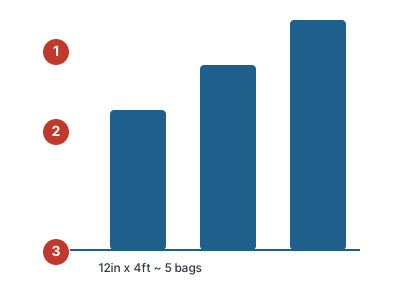
Bags per pier by tube size
Using ~0.6 cu ft per 80 lb bag (typical, always verify your mix):
| Tube size | Depth | Volume | 80 lb bags |
|---|---|---|---|
| 8 in (0.33 ft r) | 3 ft | 1.0 cu ft | 2 |
| 10 in (0.42 ft r) | 3 ft | 1.7 cu ft | 3 |
| 12 in (0.5 ft r) | 3 ft | 2.4 cu ft | 4 |
| 12 in (0.5 ft r) | 4 ft | 3.1 cu ft | 5–6 |
Add a base pad and a spare bag
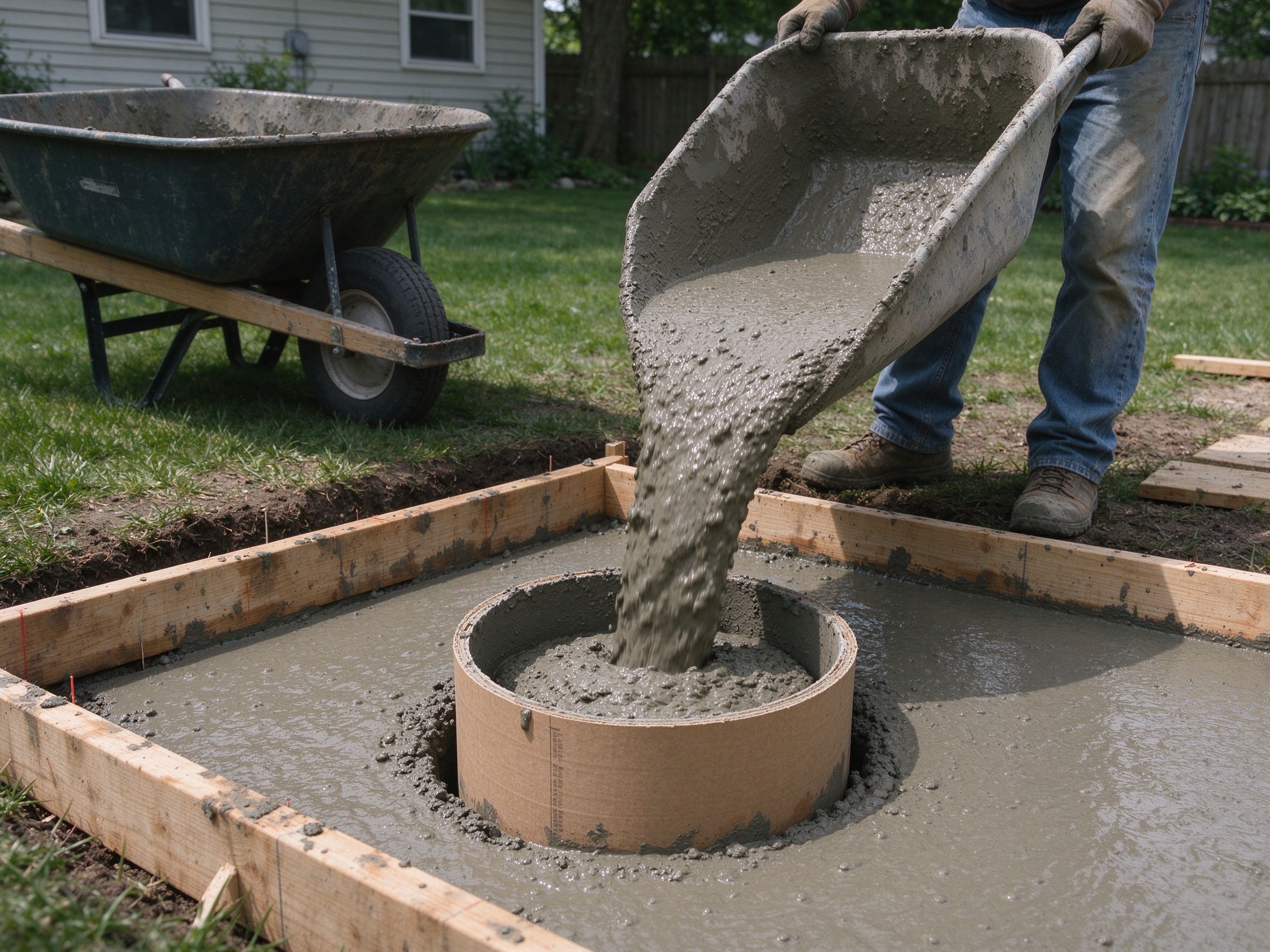
Pouring a sonotube pier isn't only the tube. A small base pad under the tube spreads the load, and you'll top off and level as concrete settles — both add material. Buy one extra 80 lb bag for every 2–3 piers to cover spillage and the pad. It's far better to return a bag than to run dry mid-pour.

Common mistakes
- Using diameter where you need radius. Volume needs radius (half the diameter) squared.
- Measuring in inches, dividing in feet. Convert everything to feet first, or the volume comes out wildly wrong.
- Trusting a fixed bag yield. Yields differ by mix and brand — read your bag.
- Forgetting the base pad. It's a real load-bearing layer; buy for it too.