Tile Grout Line Width: What to Choose
Quick answer: use 1/8-in grout lines for small tiles, 1/8–1/4 in for standard 12×12, and up to 1/2 in for large-format or stone. Grout width changes both the look and how many tiles you need.
- Width by tile size
- Grout & tile count
- Width by room
- Grout line chart
- Worked example
- Common mistakes
Width by tile size
Match grout width to tile size. Small tiles (under 6 in) look best with 1/8-in lines — wide lines on small tile look busy. Standard 12×12 uses 1/8–1/4 in. Large-format (24×24+) often needs 1/4 in or more to handle slight size variation and lippage. Stone and irregular tile take wider lines.
Grout & tile count
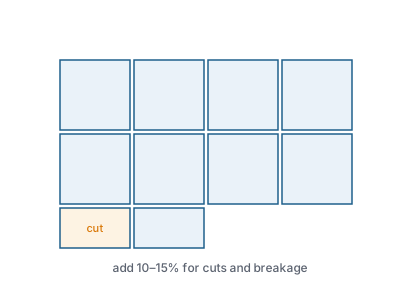
Wider grout lines mean fewer tiles per area and more grout. At 1/4-in lines, a 12×12 tile covers about 5% less area than a zero-grout layout. It's a small effect but it compounds on a big floor — worth including in the count for accuracy.
Width by room
On bathroom floors, use narrow lines — wide grout traps dirt and is hard to keep clean. On walls and backsplashes, narrow lines give a clean modern look. On stone or rustic floors, wider lines suit the texture and help level out uneven edges.
Grout line chart
| Tile type | Recommended grout line |
|---|---|
| Small mosaic / subway (under 6 in) | 1/8 in |
| Standard 12×12 | 1/8–1/4 in |
| Large format (24×24+) | 1/4 in or more |
| Stone / irregular | 1/4–1/2 in |
Check the manufacturer's recommendation — some tiles specify a minimum joint width to control lippage.
Worked example
A 12×12 floor with 12×12 tiles and 1/4-in grout:
- Each tile + grout ≈ 12.25 in, so ~5% fewer tiles per row
- Area 144 sq ft → ~150–160 tiles with 10% waste, vs 158 flat
- More grout than a tight-layout floor
The tile calculator handles the count for you.
Common mistakes
- Wide lines on small tile. Looks busy and hard to clean.
- Narrow lines on large tile. Can cause lippage.
- Ignoring grout in the count. It shrinks tiles per area.
- Stone with thin lines. Irregular edges need more grout.
FAQ
Use 1/8-inch grout lines for small tiles (under 6 in), 1/8–1/4 inch for standard 12×12 tiles, and up to 1/2 inch for large-format or irregular tiles like stone. Wider lines suit rustic looks.
Yes — wider grout lines mean fewer tiles per area and more grout. At 1/4-inch lines, a 12×12 tile covers about 5% less area than a zero-grout layout.
Use narrow 1/8-inch grout lines on small bathroom floor tiles so grout is easier to keep clean. Wide lines on floors trap dirt and are harder to maintain.
Large-format tiles (24×24 or bigger) often use 1/8–1/4 inch lines to accommodate slight size variation. Some manufacturers recommend 1/4 inch or more to keep lippage in check.